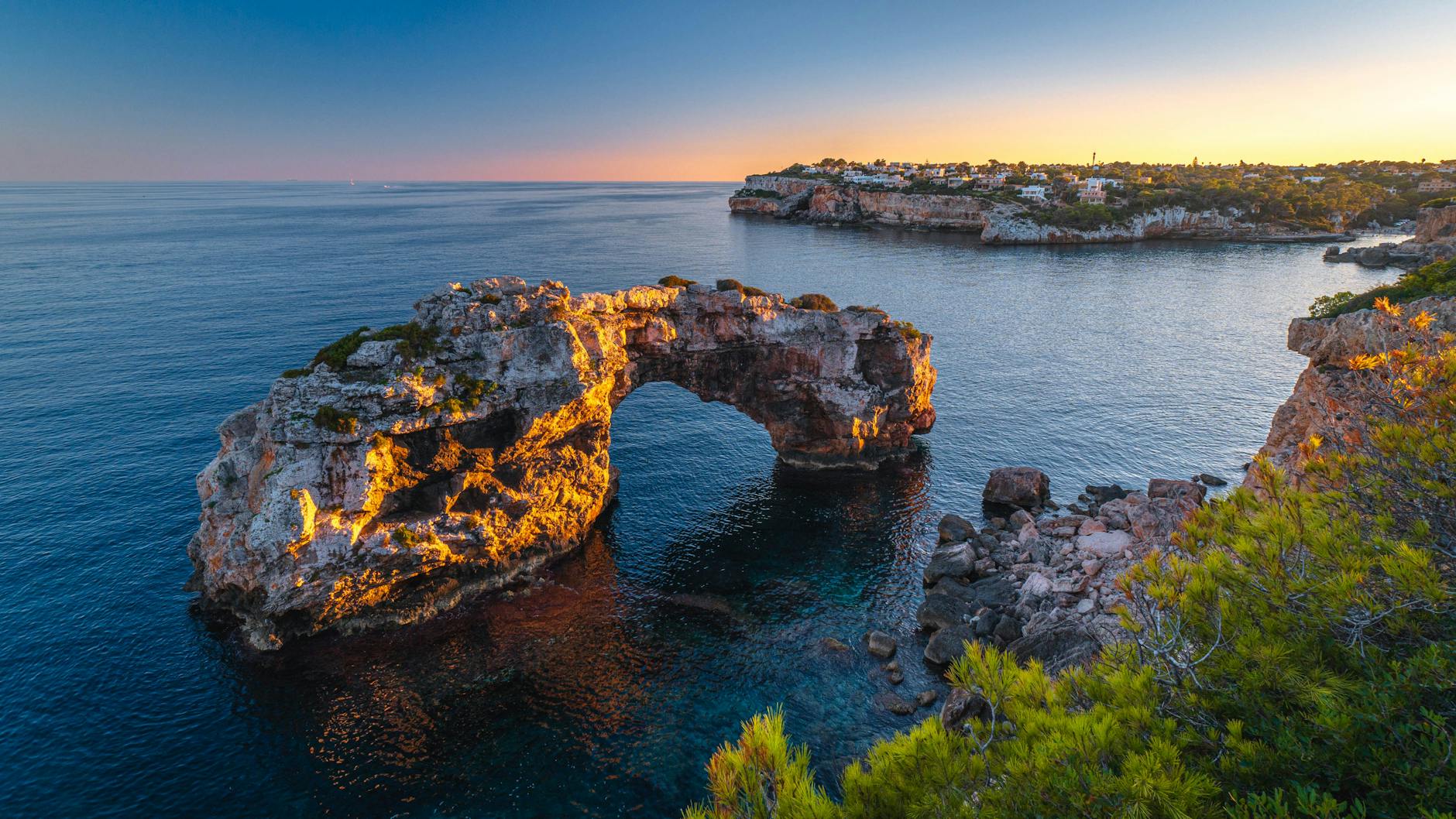
Deep-Water Soloing (DWS) on Mallorca's most formidable limestone arch. From Chris Sharma's 9a+ masterclass to accessible coastal traverses.
9a+ (5.15a YDS) on the main overhanging face. One of the hardest routes globally.
French Grade 5 / 6a (Accessible climb for intermediate coastal climbers).
Never climb alone. Use liquid chalk, check marine currents, and wear water shoes.
Mallorca is widely regarded as the birthplace of deep-water soloing, known in Catalan as psicobloc. Rather than traditional ropes, harnesses, or bolts, the only protection for a climber is a deep pool of ocean water below. It is the ultimate expression of climbing freedom.
In September 2006, Californian climbing legend Chris Sharma achieved the first free ascent of the primary overhanging line on Es Pontàs. Miquel Riera, the iconic godfather of Balearic climbing, had pointed the line out to Sharma years before. The route remains a physical masterpiece, starting under the inner leg and working through razor-sharp holds until it culminates in a massive, high-stakes 7-foot (2.1-metre) dynamic leap (a "dyno") at the apex of the arch.
Sharma graded the route a 9a+ (5.15a), making it the first psicobloc climb of this difficulty in history. During his projection of the route, Sharma endured over 50 concussive falls from the rock, plunging 20 metres (66 feet) into the sea. The route held an aura of absolute invincibility until it was repeated years later by elite professionals Jernej Kruder (Slovenia) in 2016, Jakob Schubert (Austria) in 2021, and Jan Hojer (Germany) in 2024.
While the main face is exclusively reserved for the world's most elite athletes, recreational climbers visiting Santanyí can still experience the magic of Es Pontàs. Community climbing forums indicate that the backside of the arch features a highly accessible climb.
This traverse is evaluated at an easy French grade of **5 to 6a**. Intermediate climbers can traverse the limestone ledge from water entry, wrapping around the rear structure of the rock to reach the true summit. Standing on top of the 20-metre arch is an unforgettable experience, though climbers note with disappointment that previous summiters have sometimes left litter behind. Always practice a strict leave-no-trace protocol.
If you attempt this traverse, ensure you have strong swimming skills. The climb requires substantial physical effort, and the final transition out of the water is physically taxing.
Climbing above the sea looks simple, but the marine environment introduces intense risks that demand careful management. Local guides and seasoned climbers strictly enforce these protocols:
The sea under the arch experiences intense tidal funneling, creating dangerous currents that can throw you against submerged reefs. Egress is very difficult because the vertical limestone has no natural handholds. Climbers must deploy a small inflatable dinghy or string an aid webbing ladder down the rock before climbing.
The humid Balearic air turns standard powdered chalk into a useless, greasy paste on your hands. Always use alcohol-based liquid chalk, which dries skin instantly. Experienced climbers wipe their hands directly on the fabric of their shorts to chalk up mid-route without carrying a chalk bag.
A single fall into the sea ruins a pair of climbing shoes until they are fully dry. Bring multiple pairs of climbing shoes if you plan to project. Furthermore, climbing in shoes protects your feet from the abrasive rock edges and the sharp sea urchins lining the water exits.
Jellyfish Hazard: Mediterranean jellyfish (such as the mauve stinger) frequently migrate through these coastal waters, especially in warmer months. Always conduct a visual scan of the water drop zone before you start climbing to ensure a safe fall.
If Es Pontàs feels too dangerous or physically demanding, the neighboring bay inside Cala Santanyí offers a much safer, lower-grade introduction to deep-water soloing. The cliff holds comfort routes ranging from 4c to 6a, the water is calm, and exiting the sea is very easy as you can swim directly back to the sandy beach.
Other excellent climbing areas in Mallorca include: